Evacuation and Shelter in Place
Evacuation
Evacuations are ordered by the Police Department.
Be sure to understand evacuation terminology should you find yourself in an emergency:
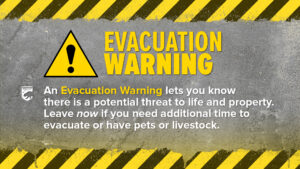 Evacuation Warning
Potential threat to life and/or property. Those who require additional time to evacuate, and those with pets and livestock should leave now.
While it’s not a mandatory order, it’s important pay attention and prepare to leave.When a warning is issued, assume an evacuation order could follow. This is your window to get ready: pack a go-bag, gather essential items, and make arrangements, especially if you have pets, large animals, or if you need extra time or assistance to leave. If you or someone in your household may need more time to evacuate safely, don’t wait for an official order. Use the warning as your cue to go early. Those few extra hours or days could save your life.
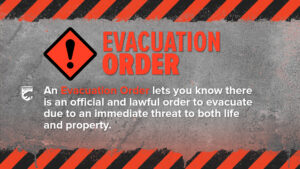 Evacuation Order
Immediate threat to life. This is a lawful order to leave now. The area is lawfully closed to public access.
An evacuation order means there is an immediate threat to life and property. This is not the time to wait or assume the danger will pass. Leave now. The earlier you leave the easier it will be to navigate the affected area and avoid traffic congestion. In this situation, it’s crucial to follow instructions from law enforcement and emergency personnel so you and your family can leave quickly and safely. Stay calm, stick to your evacuation plan, and watch for emergency vehicles on roadways.
Evacuation Order(s) Lifted
The formal announcement of lifting evacuations in an area currently under evacuation.
Hard Closure
Closed to all traffic except Fire and Law Enforcement.
Soft Closure
Closed to all traffic except Fire, Law Enforcement and critical Incident resources (i.e. Utility, Caltrans, City/County Roads etc. or those needed to repair or restore infrastructure).
Resident Only Closure
Soft closure with the additional allowance of residents and local government agencies assisting with response and recovery.
More info at California Office of Emergency Services
Shelter in Place
Go indoors. Shut and lock doors and windows. Prepare to self-sustain until further notice and/or contacted by emergency personnel for additional direction.
 Shelter
- Go inside your home or the nearest building.
- Choose an inside room with as few windows or doors as possible.
- Bring in pets, if possible.
Shut
- Close and lock all windows and doors to create a better seal.
- Turn off the heater or air conditioner. Make sure the fireplace damper and
all ventilation fans are closed. - If you are told there is danger of explosion, close the window shades, blinds
or curtains.
Listen
- Local officials are your best source of information. Keep listening to your radio or
television until you are told it is safe to leave the shelter or to evacuate. - When you leave the shelter, follow instructions from local officials to avoid any harmful materials outside.
- Do not use the telephone unless you have a life-threatening condition to keep lines free for emergency responders.
- More info at California Dept of Public Health
Go Bags Pet Go Bags Car Emergency Kit Stay Kit Evacuation/SIP