Drop. Cover. Hold On!
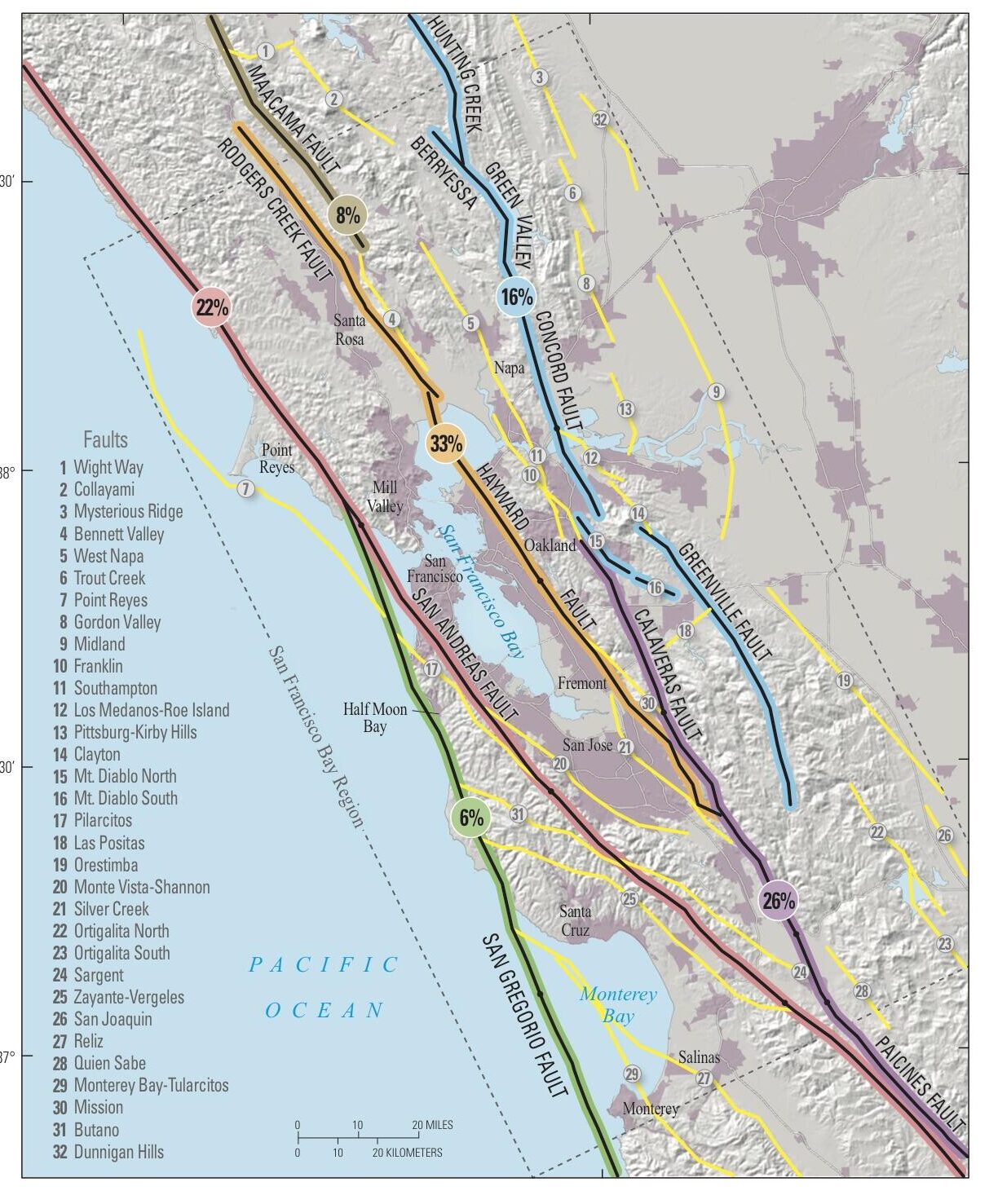
This map shows active geologic faults in the San Francisco Bay region, including the Hayward Fault. The 72 percent probability of a magnitude (M) 6.7 or greater earthquake in the region includes well-known major plate-boundary faults, lesser-known faults, and unknown faults. The percentage shown within each colored circle is the probability that a M 6.7 or greater earthquake will occur somewhere on that fault system by the year 2043. The dark, thick lines outlined in various colors represent major plate boundary faults; the thinner, yellow lines mark lesser-know, smaller faults.
Visit USGS for mapping data, research on earth, water, biological science, and expertise on environmental, resources, and public safety issues.
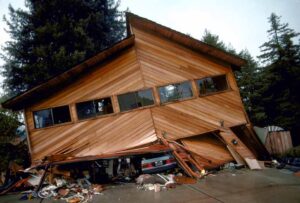
The Loma Prieta earthquake struck on October 17, 1989, measured 6.9 on the moment magnitude scale, resulting in 63 fatalities, nearly 4,000 injuries, left thousands homeless and caused significant destruction to the San Francisco Bay Area.The earthquake resulted in approximately $6 billion in property damage.
Earthquakes can cause widespread damage, disrupt essential services like power and water, and cut off access to help for days or weeks. Clearly, preparing for a major earthquake is crucial to protect lives and property, as it reduces the risk of injury and financial loss.
Earthquake preparedness starts with a simple first step: assess your risks. Take a few minutes to think about how a major earthquake may most likely affect your area. Next, create an emergency plan for your household—decide how you’ll communicate, where you’ll meet, and what steps you’ll take if critical services are disrupted. Secure your home by checking smoke detectors, anchoring heavy furniture, and identifying safe spots for shelter. Prepare Go-Bags with essentials like food, water, first aid, and medications. A bedside kit with sturdy shoes, a flashlight, and a dust mask is also highly recommended. Finally, review safety plans regularly, so everyone feels confident and ready. Taking these steps today will empower you to respond calmly when it matters most. Benjamin Franklin’s quote, “By failing to prepare, you are preparing to fail” is as true today as then. Don’t wait—start preparing now, and your future self will thank you!
The Great Shakeout
No one can predict when or where an earthquake will strike, but you can prepare yourself and your family before one hits. Practice earthquake safety and make an earthquake preparedness plan today. On October 15 at 10:15 a.m. you can join millions of people practicing earthquake safety. Drop. Cover. Hold On!

Prepare! Don’t Panic!
Personal Emergency Preparedness ‘PEP’ workshop February 7th. Free Class.
Learn how to prepare yourself and your family for when a major emergency strikes. Identify local risks, get practical tips for evacuations, what you need to shelter at home, tips to prepare your home for a major emergency, review what to put in your Go Bags, and more. The Martinez Senior Center 818 Green Street. Register fill out a form or drop us a note at [email protected].
Get Alerts
Information empowers you to make informed decisions while you have time. Hesitation, lack of information, or failure to prepare will rob you of your ability to make sound decisions and take effective action.

Sign up for an earthquake early warning alerts at MyShake so you can be notified seconds before strong shaking arrives, allowing you to take protective action. MyShake is free to residents of CA, OR, and WA.
 Martinez Alerts (Smart 911) provides timely alerts to our community. This alert and warning system will provide you with critical information quickly in a variety of situations, such as health alerts, severe weather, unexpected road closures, police activity, missing persons and evacuations of buildings or neighborhoods. Receive time-sensitive messages however you specify, including text, email, or voice.
 CWS your Community Warning Systems is is Contra Costa County’s official emergency alert system. Alerts may be issued at the request of County Officials—such as law enforcement, fire agencies, or the County Health Officer—to warn people in affected areas that they are, or may soon be, in danger and should take immediate protective action to protect life or health.